Laparoscopic Cholecystectomy (Gallstone Surgery)

Laparoscopic Cholecystectomy (Gallbladder Removal Surgery) in Delhi

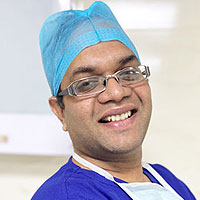
Medically Reviewed By: Dr. Neeraj Goel, MCh (GI Surgery)

Director – GI Oncology, GI & HPB Surgery

Dharamshila Narayana Superspeciality Hospital, Delhi

Review Date: October 2, 2026

What is Laparoscopic Cholecystectomy?

Laparoscopic cholecystectomy is a minimally invasive /keyhole surgical operation performed to safely remove a diseased, inflamed, or stone-filled gallbladder through tiny keyhole incisions. The gallbladder is a small, pear-shaped digestive organ resting under the liver that stores and concentrates digestive bile produced by hepatocytes.

When gallstones form or chronic inflammation sets in, the gallbladder can no longer empty normally. Gallstones can block the cystic duct, triggering excruciating abdominal pain, acute inflammation, bacterial infection, or migration into the main bile duct and pancreas. Laparoscopic cholecystectomy is considered the global gold standard for symptomatic gallbladder disease. With advanced optical magnification, energy devices, and strict adherence to surgical safety culture, Dr. Neeraj Goel performs laparoscopic and robotic gallbladder removal with minimal tissue trauma, zero incision strain, and rapid return to everyday life.

Common Causes & Indications for Gallbladder Removal

Gallbladder removal is indicated when gallstones or wall pathology compromise organ function or risk systemic complications. Key indications include:

  • Symptomatic Cholelithiasis (Gallstones): Formation of hardened cholesterol or pigment stones causing recurrent biliary colic attacks.
  • Acute and Chronic Cholecystitis: Acute bacterial inflammation or chronic fibrotic thickening of the gallbladder wall due to cystic duct blockage.
  • Choledocholithiasis: Migration of gallstones out of the gallbladder into the common bile duct (CBD), causing bile obstruction and jaundice.
  • Gallstone Pancreatitis: A gallstone temporarily lodging at the ampulla of Vater, triggering acute inflammation of the pancreas.
  • Gallbladder Polyps: Precancerous mucosal growths larger than 10 mm, rapidly growing polyps, or polyps associated with gallstones.
  • Biliary Dyskinesia & Acalculous Cholecystitis: Severe gallbladder emptying dysfunction or acute inflammation in the absence of demonstrable stones.
  • Porcelain Gallbladder: Extensive mural calcification of the gallbladder wall, carrying a high risk of gallbladder adenocarcinoma.

What Happens Inside the Diseased Gallbladder?

Gallstones develop when bile becomes supersaturated with cholesterol or bilirubin, or when the gallbladder fails to empty completely. When a stone blocks the narrow cystic duct during digestion, the gallbladder contracts forcefully against the obstruction, producing severe, spasmodic biliary colic. Prolonged impaction leads to mucosal ischemia, secondary bacterial colonization (E. coli, Klebsiella), and acute cholecystitis. If left untreated, wall tension escalates, risking gangrenous necrosis, perforation, and generalized peritonitis.

Symptoms to Watch For

Symptoms can range from episodic post-meal indigestion to debilitating acute pain requiring emergency admission.

Early Warning Signs (Biliary Colic)

  • Episodic Biliary Pain: Intense, cramping or gnawing pain in the right upper abdomen or epigastrium, often radiating to the right shoulder blade or back.
  • Postprandial Nausea & Bloating: Persistent indigestion, fullness, or vomiting, particularly after consuming greasy, spicy, or fatty foods.
  • Heartburn & Epigastric Burning: Often mistaken for gastritis or acid reflux, but unresponsive to routine antacids.
  • Loss of Appetite: Aversion to rich meals due to fear of precipitating acute abdominal distress.

Severe Signs Demanding Immediate Surgical Evaluation

  • Acute Cholecystitis (Murphy’s Sign): Severe, unremitting right upper quadrant pain lasting more than 6 hours, exacerbated by deep breathing.
  • High Spiking Fever with Shaking Chills: Signs of bacterial proliferation, empyema (pus in the gallbladder), or ascending infection.
  • Obstructive Jaundice: Yellowing of the whites of the eyes and skin, tea-colored urine, and clay-colored stools indicating a stone slipped into the bile duct.
  • Severe Epigastric Pain Radiating to the Back: Indicative of secondary acute biliary pancreatitis requiring urgent stabilization.
  • Peritoneal Signs: Severe abdominal rigidity and guarding indicating gangrene or perforation of the gallbladder.

Complications of Leaving Gallstones Untreated

  • Gallbladder Empyema & Gangrene: Accumulation of frank pus inside the tense organ leading to ischemic wall necrosis and septic shock.
  • Gallbladder Perforation & Bile Peritonitis: Rupture of the gallbladder wall spilling caustic bile and pus across the abdominal cavity.
  • Acute Biliary Pancreatitis: Gallstones migrating into the common bile duct blocking pancreatic outflow, causing severe autodigestion of the pancreas.
  • Ascending Cholangitis: Life-threatening bacterial infection of the entire biliary tree trapped behind a lodged common duct stone.
  • Gallbladder Cancer: Longstanding chronic inflammation from large gallstones (>2.5 cm) or porcelain gallbladder substantially increases the risk of gallbladder malignancy.

How Doctors Diagnose Gallbladder Disease

  • Abdominal Ultrasound: The gold standard, highly accurate first-line test. Rapidly identifies gallstones, acoustic shadowing, gallbladder wall thickening (>3 mm), and pericholecystic fluid.
  • Liver Function Tests (LFTs): Evaluates bilirubin, alkaline phosphatase (ALP), ALT, and AST to rule out common duct obstruction and acute hepatitis.
  • Magnetic Resonance Cholangiopancreatography (MRCP): Non-invasive magnetic imaging utilized if stones in the common bile duct or anatomical variations are suspected.
  • Endoscopic Retrograde Cholangiopancreatography (ERCP): Employed before surgery to extract common bile duct stones if jaundice or ductal dilatation is present.
  • Contrast-Enhanced CT (CECT): Helpful in complex presentations to assess gallbladder perforation, pericholecystic abscesses, or rule out malignancy.

Treatment Options

While dietary modifications and antispasmodics can provide temporary symptom relief during a colic episode, they do not dissolve or eliminate gallstones. Oral dissolution therapies (ursodeoxycholic acid) have extremely poor efficacy, take years, and result in immediate stone recurrence upon cessation. Surgical removal of the gallbladder (cholecystectomy) is the only permanent, definitive cure for symptomatic gallstone disease.

When Is Surgery Needed?

Laparoscopic cholecystectomy is strongly indicated under the following clinical situations:

  • Biliary Colic: Any patient who has suffered one or more documented attacks of painful biliary colic.
  • Acute Cholecystitis / Empyema: Active bacterial infection, mucocele, or impending gangrene of the gallbladder.
  • Gallstone Pancreatitis: Definitive gallbladder removal following recovery from acute biliary pancreatitis to prevent fatal recurrences.
  • Choledocholithiasis: Gallbladder clearance following endoscopic extraction of common bile duct stones.
  • Premalignant Gallbladder Polyps: Polyps measuring larger than 10 mm or showing progressive interval growth on serial ultrasounds.

Laparoscopic & Robotic Cholecystectomy

Laparoscopic cholecystectomy is performed under general anesthesia through 3 to 4 tiny incisions (ranging from 5 mm to 10 mm) on the abdominal wall. The abdomen is gently insufflated with medical carbon dioxide gas. A high-definition laparoscope delivers crystal-clear magnified views of the hepatic hilum. Dr. Neeraj Goel routinely implements the 'Critical View of Safety' (CVS) protocol—rigorously dissecting the hepatocystic triangle to unequivocally identify the cystic duct and cystic artery prior to clipping and division, guaranteeing zero injury to the main bile duct.

  • Key Benefits of Minimally Invasive Removal: Negligible operative blood loss, avoidance of large muscle-cutting incisions, minimal post-surgical discomfort, same-day or 24-hour discharge, excellent cosmetic results, and return to full physical activity within days.

Types of Surgical Approaches

  • Standard 4-Port Laparoscopic Cholecystectomy: The universally accepted gold standard, offering optimal triangulation, safety, and rapid operative time.
  • Single-Incision Laparoscopic Surgery (SILS): Performed via a single hidden incision inside the belly button for virtually scarless results.
  • Robotic Cholecystectomy: Utilizing robotic wristed instruments and 3D high-magnification vision for extremely difficult gallbladders featuring dense chronic fibrosis or distorted anatomy.
  • Subtotal / Fenestrating Cholecystectomy: A proven damage-control bailout technique in severely inflamed, frozen Calot's triangles to avoid bile duct trauma while completely clearing stones.

Recovery & Follow-Up Care

Following laparoscopic cholecystectomy, most patients walk comfortably within 4 to 6 hours and are discharged either the same evening or the following morning. Normal oral liquids and light low-fat solid meals are initiated immediately on the day of surgery. Patients typically return to office work and light routine activities within 5 to 7 days, and full strenuous exercise within 2 to 3 weeks.

Why Choose Dr. Neeraj Goel?

Dr. Neeraj Goel is a board-certified Senior GI & HPB Surgeon with decades of high-volume surgical experience in laparoscopic and robotic abdominal operations. He specializes in both routine and complex, difficult gallbladder surgeries—including acute gangrenous cholecystitis, frozen Calot's triangle, cirrhosis, and revision repairs. Adhering to strict international Safe Cholecystectomy protocols, Dr. Goel provides patients with unmatched precision, rapid rehabilitation, and compassionate clinical care.

Frequently Asked Questions About Laparoscopic Cholecystectomy

1. What is laparoscopic cholecystectomy, and how is it performed?

Laparoscopic cholecystectomy is a minimally invasive surgical procedure used to remove a diseased gallbladder. Under general anesthesia, the surgeon makes 3 to 4 tiny incisions (each 0.5 to 1 cm) in the abdomen. A miniature camera (laparoscope) and delicate instruments are inserted. Guided by magnified high-definition video monitors, the surgeon carefully detaches the gallbladder from the liver and retrieves it through one of the tiny keyhole ports.

2. Can a person live a normal, healthy life without a gallbladder?

Yes, absolutely. The gallbladder does not produce bile; it merely acts as a temporary holding reservoir. The liver continuously manufactures bile. After your gallbladder is removed, bile trickles directly and continuously from the liver into the small intestine through the common bile duct. Your digestion continues normally, and you can live a completely healthy, unrestricted life.

3. Can gallstones simply be dissolved with medication or removed with lasers instead of surgery?

No. Medications (such as bile acid pills) are extremely ineffective, take years to show minimal effect, only work on rare non-calcified cholesterol stones, and carry a stone recurrence rate over 90% once stopped. Shockwave lithotripsy and lasers are not approved for gallbladder stones because shattered fragments can migrate and trigger life-threatening pancreatitis or bile duct blockage. Removing the diseased gallbladder is the only proven, permanent cure.

4. Why is the entire gallbladder removed instead of just taking out the stones?

Taking out only the stones leaves behind a diseased, dysfunctional gallbladder wall that will continue to form new stones within months. Furthermore, cutting open the gallbladder and stitching it back together causes dangerous bile leaks and dense adhesions. Removing the organ entirely cures the problem permanently with zero risk of recurrence.

5. How long does the laparoscopic gallbladder operation take?

In routine cases with minimal inflammation, the procedure typically takes 30 to 45 minutes. If the gallbladder is acutely inflamed, gangrenous, thickened, or surrounded by dense adhesions from previous attacks, the surgery may take 60 to 90 minutes to ensure meticulous dissection and total safety.

6. How painful is recovery after laparoscopic gallbladder removal?

Pain is minimal compared to traditional open surgery because abdominal muscles are not cut. Most patients report mild soreness around the belly button incisions and an ache in the right shoulder (caused by residual carbon dioxide gas used during surgery, which dissipates within 24 to 48 hours). Routine mild oral pain relievers are generally all that is needed for the first 2 to 3 days.

7. How long will I need to stay in the hospital?

Laparoscopic cholecystectomy is frequently performed as a day-care or short-stay procedure. Most patients are discharged either the same evening or the following morning (within 24 hours) once they are walking comfortably, tolerating a normal diet, and urinating freely.

8. When can I return to work and resume normal daily activities?

Most patients are able to walk and manage light self-care immediately on the day of surgery. Desk-based office work, light walking, and driving can typically be resumed within 5 to 7 days or sometimes even earlier. Heavy weight lifting and strenuous gym workouts can safely be resumed after 3 to 4 weeks.

9. What dietary changes do I need to follow after surgery?

For the first 2 to 3 weeks after surgery, it is recommended to consume light, balanced meals that are low in excess grease and heavy animal fats to allow your digestive tract to adjust. Afterward, the vast majority of patients return to a completely normal, unrestricted diet without noticing any digestive discomfort.

10. What is the 'Critical View of Safety' in laparoscopic cholecystectomy?

The 'Critical View of Safety' (CVS) is an internationally mandated surgical safety standard pioneered to prevent bile duct injuries. It requires the surgeon to completely dissect and clear the lower gallbladder neck and Calot's triangle so that only two structures—the cystic duct and cystic artery—are visible entering the gallbladder before any clip or cut is made. Dr. Neeraj Goel strictly practices CVS on every operation.

11. What are the risks or complications of laparoscopic cholecystectomy?

Laparoscopic cholecystectomy is one of the safest operations performed globally, with serious complication rates under 1%. Potential rare risks include bleeding, wound infection, temporary bile leak, or injury to adjacent bile ducts or bowel. Choosing an experienced, high-volume GI/HPB surgeon minimizes these risks to the lowest possible level.

12. What symptoms should prompt immediate medical evaluation after surgery?

While complications are rare, you should contact the surgical team immediately if you develop: high-grade fever with chills, progressive abdominal swelling or worsening severe pain unresponsive to medication, yellowing of your eyes or skin (jaundice), persistent vomiting, or continuous redness and fluid discharge from an incision port.

Schedule an Advanced GI Laparoscopic Consultation with Dr. Neeraj Goel

  • Specialist: Neeraj Goel, MBBS, MS, MCh (Surgical Gastroenterology)
  • Designation: Director & Senior Consultant – GI Oncology, GI & HPB Surgery
  • Hospital Address: Dharamshila Narayana Superspeciality Hospital, Vasundhara Enclave, Delhi.
    For Appointment Call: 095992 94453
    Consultation Hours: Monday to Saturday, 10:00 AM to 4:00 PM
  • Clinic Address: DIGS, Room No. 1, UG Floor, C-61A, Rajan Babu Rd, Block C, Adarsh Nagar, Delhi, 110033.
    For Appointment Call: 098113 92062
    Consultation Hours: Monday to Saturday, 06:00 AM to 7:30 PM
  • Clinical Focus: Advanced Laparoscopic & Robotic GI Cancer Resection, Laparoscopic Cholecystectomy, Hernia & Bariatric Surgery
  • Inquiries & Appointments: Dedicated Gastrointestinal & Minimally Access Surgery Outpatient Clinic, Dharamshila Narayana Superspeciality Hospital, Delhi
Medical Disclaimer: The information provided on this page is for educational and informational purposes only and is not intended as a substitute for professional medical advice, diagnosis, or treatment. Always seek the advice of your physician or another qualified healthcare provider with any questions you may have regarding a medical condition or treatment plan.
GI Surgeon In DelhiQuestions? Contact us online or give us a call at +91-9599294453 today!
| | |
© 2026 GASTRODELHI-Dr. Neeraj Goel All Rights Reserved.