Liver Cancer

Liver Cancer Treatment in Delhi

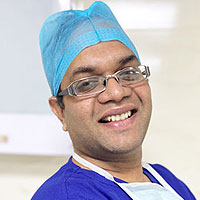
Dr. Neeraj Goel

Medically Reviewed By: Dr. Neeraj Goel, MBBS, MS, MCh (GI Surgery)

Designation: Director – GI Oncology, GI & HPB Surgery

Clinical Review Date: August 18, 2026

What is Liver Cancer?

Liver cancer occurs when abnormal cells inside the liver grow out of control. Tumors here generally fall into two main groups:

  • Primary Liver Cancer (Hepatocellular Carcinoma - HCC): Primary cancers arise from hepatocytes. They occur in people with underlying liver disease, such as cirrhosis. Hepatitis B and C are the most common causes of cirrhosis, along with alcohol. The other common primary tumor is Intrahepatic Cholangiocarcinoma.
  • Secondary (Metastatic) Liver Cancer: Cancer that begins somewhere else—such as the colon, rectum, stomach, appendix, or pancreas—and travels to the liver through the blood.

Treating liver cancer is always a balancing act: we need to get rid of the tumor completely while making sure you keep enough working liver tissue to stay healthy.

Symptoms

Early on, liver tumors rarely hurt. Most patients find them incidentally on a routine ultrasound or a scan ordered for an upset stomach. As a growth gets bigger, your body starts sending up warning signs:

  • A dull ache or heavy fullness under your ribs on the upper right side.
  • Dropping weight without trying and losing your appetite.
  • Constant tiredness and feeling run-down.
  • Jaundice, which turns the skin and the whites of your eyes yellow.
  • A swollen belly filled with fluid buildup (ascites).

Surgery: Liver Resection (Hepatectomy)

If your liver is otherwise in good shape, cutting the tumor out gives you the best shot at a long-term cure. The surgeon removes the bad section of the liver along with a safe rim of healthy tissue around it.

The liver is the only organ in your body that can actually rebuild itself. In a patient without severe underlying cirrhosis, the healthy tissue left behind quickly begins expanding, rebuilding adequate working capacity within just a few weeks.

Types of Liver Resections

The exact procedure depends on the tumor's size, depth, and where it sits next to major blood vessels:

  • Wedge Resection: Removing a small part of liver tissue in a non-anatomical way.
  • Segmentectomy: Removing a single anatomical segment while preserving the rest of the liver.
  • Sectionectomy: Removing two adjoining liver segments together.
  • Major Hepatectomy (Lobectomy): Removing an entire right or left liver lobe.

Request an appointment
 

Keyhole and Robotic Surgery

Minimally Invasive Techniques help you heal faster:

  • Magnified 3D Vision: Gives the surgeon a close-up, high-definition view of tiny bile ducts and delicate blood vessels.
  • Wristed Instruments: Tiny tools that bend and rotate beyond the reach of human fingers, making work in deep areas steady and clean.
  • Easier Recovery: Smaller cuts mean less pain after surgery, less blood loss, smaller scars, and a quicker return to regular meals and home life.

A Complete Treatment Plan

Surgery is not the answer for all tumors. Advanced tumors are treated with a combination of different modalities.

  • Targeted Daily Pills: These medications act on specific targets on the tumor cells to block their growth.
  • Immunotherapy: These treatments boost the immune system to destroy tumor cells.
  • Local Procedures: These include radiofrequency or microwave ablation (RFA/MWA), which are used to treat smaller tumors. These procedures can be performed under ultrasound guidance.

Request an appointment
 

Why Consult Dr. Neeraj Goel?

For more than twenty years, we have focused on the delicate work of complex liver, bile duct, and gastrointestinal cancer surgery. Today, that experience comes together with robotic and keyhole tools, letting us remove tumors through tiny, gentle cuts rather than large incisions. Because no two livers are alike, you won't just have a surgeon in your corner—you'll have a close-knit team of liver specialists, radiologists, and oncologists all sitting at the same table to tailor a care plan that protects your liver and fits your life.

Clinical Perspective

Liver surgery is all about finding the right balance: removing the tumor completely while preserving enough healthy liver tissue. For early-stage tumors, using robotic and keyhole tools lets us remove the growth cleanly through small incisions. Most of our patients are up and walking the very next day and ready to head home in 4 to 6 days.

Frequently Asked Questions About Liver Cancer

Can liver cancer actually be cured?

Yes, absolutely. When we spot the tumor early and take it out completely with clean margins, surgery gives you the cleanest shot at a long-term cure or lasting remission.

How do you know if my liver is strong enough for an operation?

We run detailed contrast scans and liver function blood tests before doing anything. This allows us to calculate the exact size and strength of the healthy liver that will stay behind after the tumor is gone.

How much of my liver can be taken out safely?

In a healthy liver without cirrhosis, we can remove up to 70% of the tissue because it regenerates so quickly. For cirrhotic livers, a larger portion of the liver must be left behind.

How fast does the liver grow back after surgery?

The liver starts regenerating immediately. It reaches sufficient volume within a few weeks.

What makes metastatic liver cancer different from primary liver cancer?

The cancer that originates in the liver cell is primary liver cancer.Metastatic cancer starts somewhere else in the gut—like the colon, appendix, or stomach—and travels to the liver through the blood. Both can often be treated surgically depending on how many spots there are.

Does a high AFP blood test mean I definitely have liver cancer?

Not necessarily. While higher Alpha-Fetoprotein levels can point to a tumor, simple inflammation or active hepatitis can bump those numbers up too. We always confirm things with a dedicated CT or MRI scan before making a diagnosis.

What is recovery like after robotic liver surgery?

Because robotic incisions are tiny and spare your abdominal muscles, you deal with far less pain and bounce back much faster. Most of our patients are out of bed the next morning and heading home in about 4 to 6 days.

Schedule an Advanced GI Laparoscopic Consultation with Dr. Neeraj Goel

  • Specialist: Neeraj Goel, MBBS, MS, MCh (Surgical Gastroenterology)
  • Designation: Director & Senior Consultant – GI Oncology, GI & HPB Surgery
  • Hospital Address: Dharamshila Narayana Superspeciality Hospital, Vasundhara Enclave, Delhi.
    For Appointment Call: 095992 94453
    Consultation Hours: Monday to Saturday, 10:00 AM to 4:00 PM
  • Clinic Address: DIGS, Room No. 1, UG Floor, C-61A, Rajan Babu Rd, Block C, Adarsh Nagar, Delhi, 110033.
    For Appointment Call: 098113 92062
    Consultation Hours: Monday to Saturday, 06:00 AM to 7:30 PM
  • Clinical Focus: Advanced Laparoscopic & Robotic GI Cancer Resection, Laparoscopic Cholecystectomy, Hernia & Bariatric Surgery
  • Inquiries & Appointments: Dedicated Gastrointestinal & Minimally Access Surgery Outpatient Clinic, Dharamshila Narayana Superspeciality Hospital, Delhi
Medical Disclaimer: This guide is written to give you clear, practical information about liver health, but it cannot replace sitting down for a one-on-one exam with a doctor. Early liver tumors are quiet and rarely cause discomfort. If you have ongoing ache under your ribs on the right side, sudden weight loss, yellowing in your eyes, or swelling in your belly, get checked promptly by a GI and liver specialist.
GI Surgeon In DelhiQuestions? Contact us online or give us a call at +91-9599294453 today!
| | |
© 2026 GASTRODELHI-Dr. Neeraj Goel All Rights Reserved.